
Joint Thrust Techniques

- Description
- Curriculum
- FAQ
- Notice
What are Joint Thrust (High Velocity Low Amplitude) Techniques?
Joint thrust techniques aka HVLA are a type of manual therapy that involves the application of a high-velocity, low-amplitude force to a joint. This force is used to increase the range of motion of the joint and to reduce pain and inflammation.
Why Take the Course?
There are many reasons why you might want to take the Joint Thrust Techniques course. Some of the reasons include:
- If you are a clinician who wants to learn how to use this technique in your practice
- If you are a student who is interested in learning about joint thrust techniques
- If you are an athlete who wants to learn how to self-administer
What are Joint Thrust Techniques? Joint thrust techniques are a type of manual therapy that involves the application of a high-velocity, low-amplitude force to a joint. This force is used to increase the range of motion of the joint and to reduce pain and inflammation. The Joint Thrust Techniques (also known as high-velocity low-amplitude or HVLA)course is designed for clinicians, and students, who want to learn about the use of HVLA in the treatment of musculoskeletal pain.
This course covers the anatomy and physiology of joints, the indications and contraindications for high velocity low-amplitude thrust manipulation techniques, the different types of techniques, the proper technique for performing the techniques, the risks and complications of joint thrust techniques, and the evidence-based research on the effectiveness of joint thrust techniques.
JTT Part A include: Upper cervical + CT Junction+ Mid Thoracic Spine +TL Junction
JTT Part B include: Supine, Seated, Standing and Floor Options of JTT for C-Spine
-
1
 Comprehensive Overview of Joint Thrust Technique
 -
2
Theories and Evidence Behind Joint Thrust Techniques
-
3
Latest Research on Joint Thrust Techniques
-
4
Indications and Contraindications of Joint Thrust Techniques
-
5
Understanding Risks and Complications of HVLA Techniques
-
6
Unlocking the Secrets of Joints Anatomy and Physiology Explained
-
7
Mastering Proper HVLA Techniques for Optimal Performance
-
8
 JTT Exam
-
9
 Learning Objectives
Upon completion of this course, you will be able to:
- Identify the current best evidence for the implementation of thrust joint spinal manipulation in clinical practice.
- Identify the safety issues, precautions, and contraindication.
- Distinguish the choice of manipulative procedures in the evidence-based multi-modal approach to spinal pain.
- Analyze the risk factors associated with spinal manipulation to screen patients properly using a thorough history and targeted physical examination.
- Identify the use of body and posture in application of high velocity low-amplitude thrust to make them an integral part of technique delivery.
- Demonstrate the psychomotor skills necessary to appreciate the pre-manipulative barrier (end-feel) utilized in minimal leverage or momentum induced manipulative technique by concentrating on combining multiple leverages in order to minimize the overall amplitude and force required to achieve cavitation.
- Demonstrate clinical reasoning skills in the selection of high-velocity low-amplitude thrust manipulation techniques for a variety of neuro-musculoskeletal dysfunctions.
- Apply and demonstrate how to effectively diagnose and treat upper, mid, and lower cervical joint dysfunction, sacro-iliac joint dysfunction, lumbar spine facet syndromes, second and third rib syndromes, and cervicothoracic joint dysfunction.
-
10
Lab Schedule (In-Person)
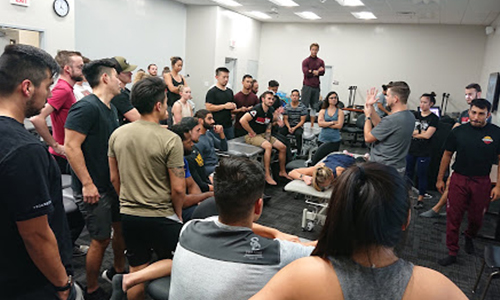
TIME LAB SCHEDULE (IN-PERSON) 4.5 hours 9:30AM-9:45AM Check-In 30 min Lecture Review Origins, Indications, Contraindications, Differences between the brands, Fascial anatomy and mechanosensory fascial function 2 hour LAB/ Neuromuscular Taping Assessments & Labs – Upper Extremity and Spine Protocols: Joint distraction techniques, Palpations and proper applications with taping, Proprioceptive exercises, Fascial stretch taping 15 min Break 2 hour Lab/ Neruomuscular Taping Assessments - Lower Extremity and Spine Protocols: Joint distraction techniques, palpations and proper applications with taping, proprioceptive exercises, fascial stretch taping 30 min Practical lab exam/ Q & A / Participant Evaluation -
11
Participant Evaluation
You can expect to receive your certificate within 14 days after all requirements are fulfilled.
Hybrid Course: Self-Study Lecture (2.5 hours) with In-Person Lab (4.5 hours)
Recommended Attire
Gym-Style, Comfortable Clothing: Opt for athletic wear that allows for unrestricted movement. This will make it easier to perform and receive hands-on techniques.
Tops: A lightweight t-shirt or tank top.
Shorts: Wearing shorts is highly encouraged as many techniques involve the legs, knees, and thighs. Shorts make these areas easily accessible for practice.
Layering for Comfort: Consider bringing a sweatshirt or light jacket in case the training room is cool.
| Student | $275 |
| Clinician | $475 |
Require foundational knowledge or prior experience related to the subject matter.
Access to Technology: device and reliable internet access.
- Chiropractor
- Physical Therapist
- Other healthcare professional in the field



Event Details
| S.No | Date & Time | Address | Instructor |
|---|---|---|---|
| 1 | 2025-02-22 09:30:00 | Honolulu, HI | Davis Koh, DPT, MBA, GCS, CSCS |
| 2 | 2025-03-29 09:30:00 | Honolulu, HI | Davis Koh, DPT, MBA, GCS, CSCS |